Changsha, the capital city of Hunan province, is the political, economic, cultural, scientific, educational, commercial, and financial center of the province. It governs six districts, namely Furong, Tianxin, Yuelu, Kaifu, Yuhua, and Wangcheng, and three county-level areas, namely Changsha County, Liuyang City, and Ningxiang City. Changsha has six national-level industrial parks and major strategic platforms, including the National Two-Oriented Society Comprehensive Reform Pilot Zone, the Changsha-Zhuzhou-Xiangtan National Innovation Demonstration Zone, the Hunan Xiangjiang New Area, and the Changsha area of China (Hunan) Pilot Free Trade Zone.
Changsha spans an area of 11,800 square kilometers, with a population of approximately 10.42 million.
Changsha has a deep cultural heritage.
The city boasts a 3,000-year history, with its name and location unchanged through centuries. Its cultural relics and sites, such as the Mawangdui Han Tombs, the Three Kingdoms Bamboo Slips, and the Yuelu Academy, are internationally renowned. The city has 2,407 immovable cultural relics and 275 historical sites of great significance to the history of the Communist Party of China, preserving records of Chinese leaders such as Mao Zedong and Liu Shaoqi, revolutionaries such as Huang Xing and Cai E, as well as historical figures such as Qu Yuan and Jia Yi. This has earned Changsha the name of "a museum without walls."
Changsha is a beautiful and clean city.
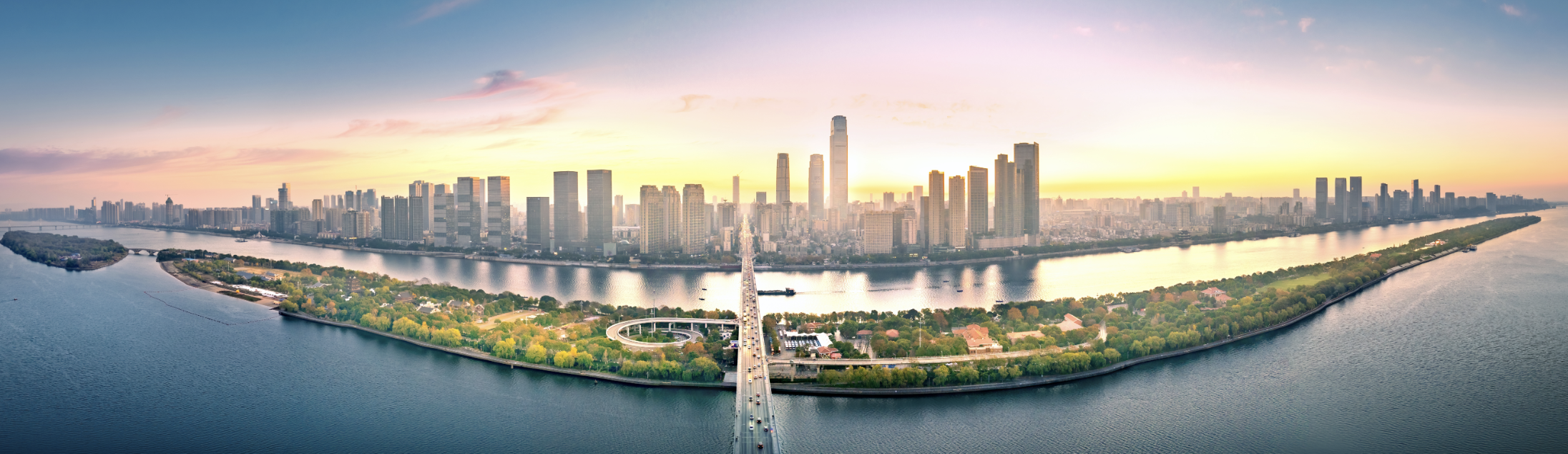
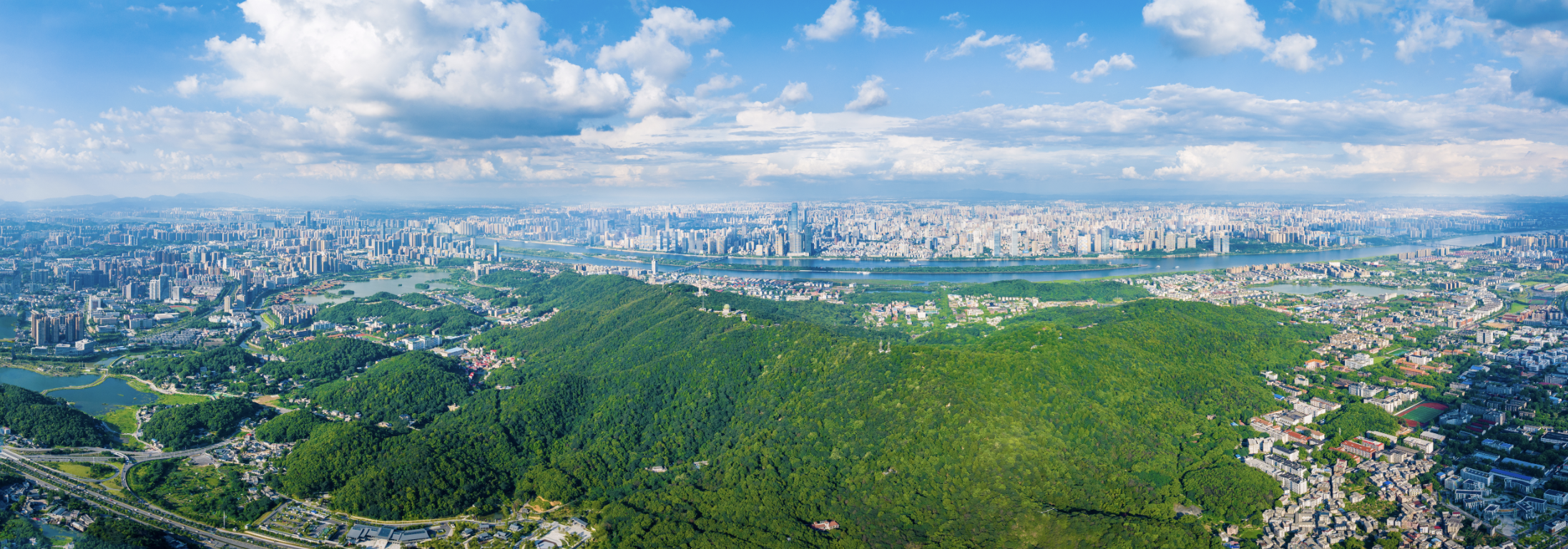
Changsha’s landmarks such as Yuelu Mountain, the Xiangjiang River, and Orange Isle make a picturesque landscape. The city’s air quality enjoys an excellence rate of 88%, and the water quality of national and provincial monitoring sections has remained 100% excellent for five consecutive years. Changsha is among China’s top tourist cities and has been recognized as a national forest city and a national garden city.
Changsha is a national transportation hub.
Changsha is the place where the Beijing-Guangzhou, Shanghai-Kunming, and Chongqing-Xiamen high-speed railways intersect. The Huanghua Airport connects to over 170 domestic and international destinations. It has an extensive network of expressways, including the Beijing-Hong Kong-Macao, Shanghai-Kunming, Xu-Guang, Wu-Shen, Hangzhou-Changsha, and Changsha-Yiyang highways. The city operates seven metro lines with a total length of 226.6 kilometers. Changsha’s three major ports – Xianing Port, Tongguan Port, and Changsha Port – have been powerful engines driving its economy. Among them, Changsha Port connects to the Yangtze River golden waterway. The China-Europe Railway Express (Changsha) has made over 1,000 train trips, ranking among the nation’s most.
Changsha is a fertile land for sci-tech innovation.
Changsha is home to 58 higher education institutions such as the National University of Defense Technology, Central South University, and Hunan University, and they altogether enroll 830,000 students. The city also hosts 113 research institutions, 68 academicians from the Chinese Academy of Sciences and the Chinese Academy of Engineering, and over 7,800 high-tech enterprises. Changsha is the birthplace of an array of sci-tech breakthroughs such as super hybrid rice, supercomputers, and carbon-carbon composites. With an R&D investment intensity of 3.27%, the city is cementing its position as a global R&D hub and promoting major platforms like the "Four Laboratories" and Xiangjiang Science City. It has ranked eighth among the most innovative Chinese cities for three consecutive years.
Changsha is a manufacturing powerhouse.
With an economy ranked sixth among provincial capitals in China, Changsha is vigorously attracting investment as its priority and building a modern industrial system. It is the only city in China with four national-level licenses in the intelligent and connected vehicle field. Changsha has developed manufacturing clusters of construction machinery and next-generation autonomous computing systems, and hosted globally renowned companies such as SANY, Zoomlion, Sunward, and Lens Technology. It is the world's second city to have over five companies in the Top 50 Global Construction Machinery Manufacturers and ranks sixth in the Top 100 Advanced Manufacturing Cities in China. The city hosts 201 Fortune 500 companies and 87 listed companies, leading all provincial capitals in central China.
Changsha is an ideal city for living and investment.
Restaurant brand Wenheyou, tea brand Chayan Yuese, and the Hunan Museum see long queues, as its nightlife thrives, making the city a top destination for travelers.
Home to more than 1.77 million market entities, Changsha has been recognized as one of China's most attractive cities for investment and one of the best cities for foreign investors. It is a national model for city governance and food safety. Changsha has also been named China’s happiest city for 16 consecutive years.